Could Augmented Analytics be the Solution to the Recognition Lag?
Disclaimer: The writing and musings of the author do not necessarily reflect the views of his employer.
It has been a long time since my last blog post, so I wanted to start with a simple thought piece that is largely inspired by the pandemic.
Recognition Lag
There is usually a lag between when a significant event occurs and when it is recognized to have occurred, a lag between the recognition and the implementation of a solution, and finally, a lag between the implementation phase and the resulting impact. These lags are usually respectively referred to by economists as recognition, implementation, and impact lags.
Whether we are dealing with macroeconomy, business operation or a pandemic, the time lapses between recognition, decision, and action are always critical. And historically, recognition lag has been found to be the bottleneck with delays, depending on the industry, spanning from several weeks to several months. It is no wonder that economists tend to signal market downturns long after an economic shock (i.e., boom or bust) has occurred. So the question that invariably arises is how to reduce the gap and get to a decision quicker. The answer, though a bit cliché, is of course for companies to harness the power of their data to get better insight…to become more data-driven!
Analytics for LOB
So quite naturally, in the recent years we noticed a paradigm shift. Lines of business (LOB) started taking ownership of their data to get more insight out of them. Data analytics went from being a service provided by IT to a more decentralized service owned by individual business units, with support from IT.
Augmented Analytics
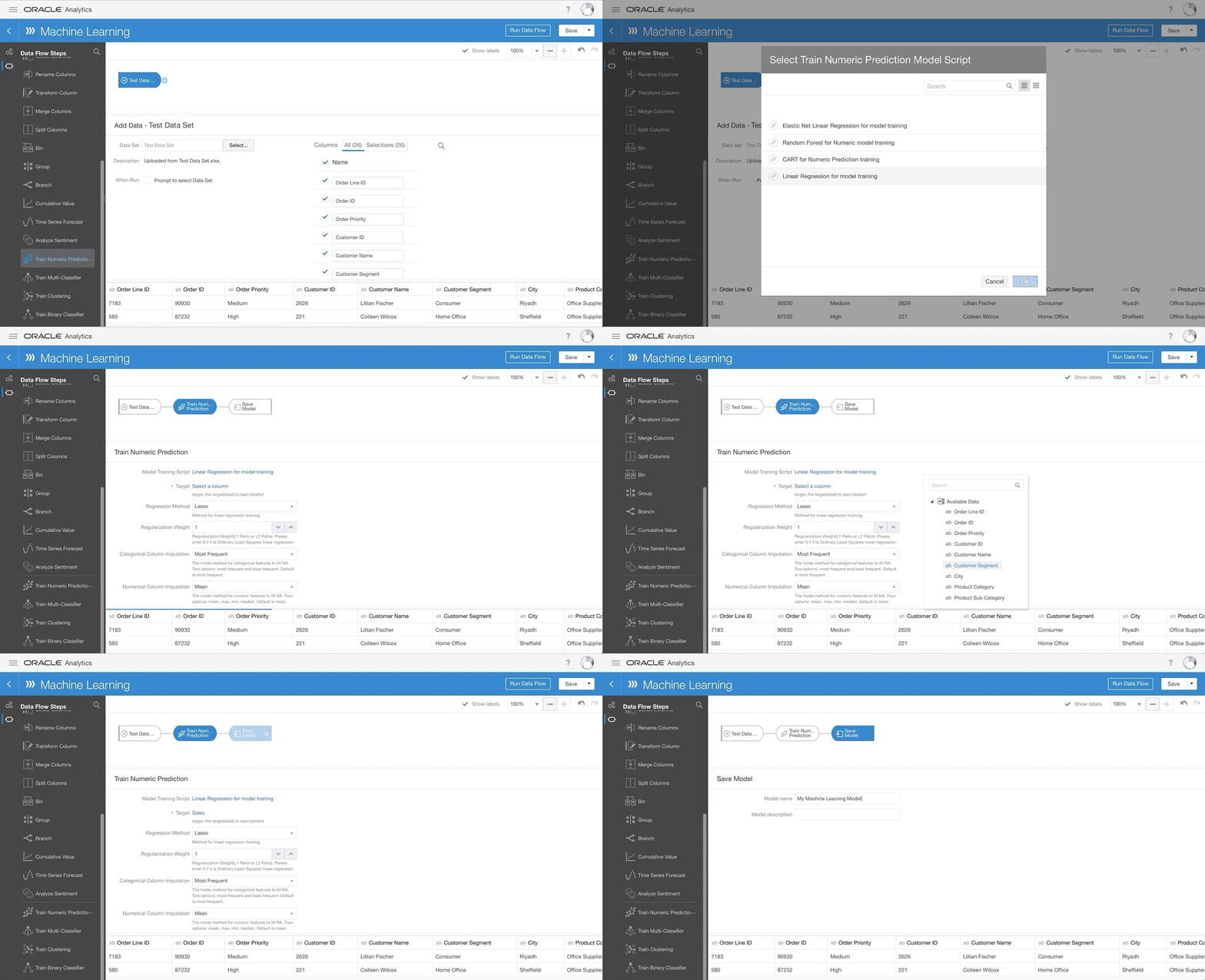
What we observed during the pandemic was that companies who managed to stay ahead of the curve needed to have the ability to do Augmented Analytics. They needed to go beyond reporting on transactional and/or historical data, but also inject Artificial Intelligence (AI) and Machine Learning (ML) into their analytics workstreams to make better decisions and more importantly, predictions.
Oracle Analytics Cloud (OAC)
With the scarcity of data scientists, having the right data analytic tools becomes even more important. Given the amount of data generated by the average company, the right data analytics tool should, at the very least, be able to blend, enrich, enhance and analyze siloed data.
Here are some key features of OAC that makes it a great data visualization tool:
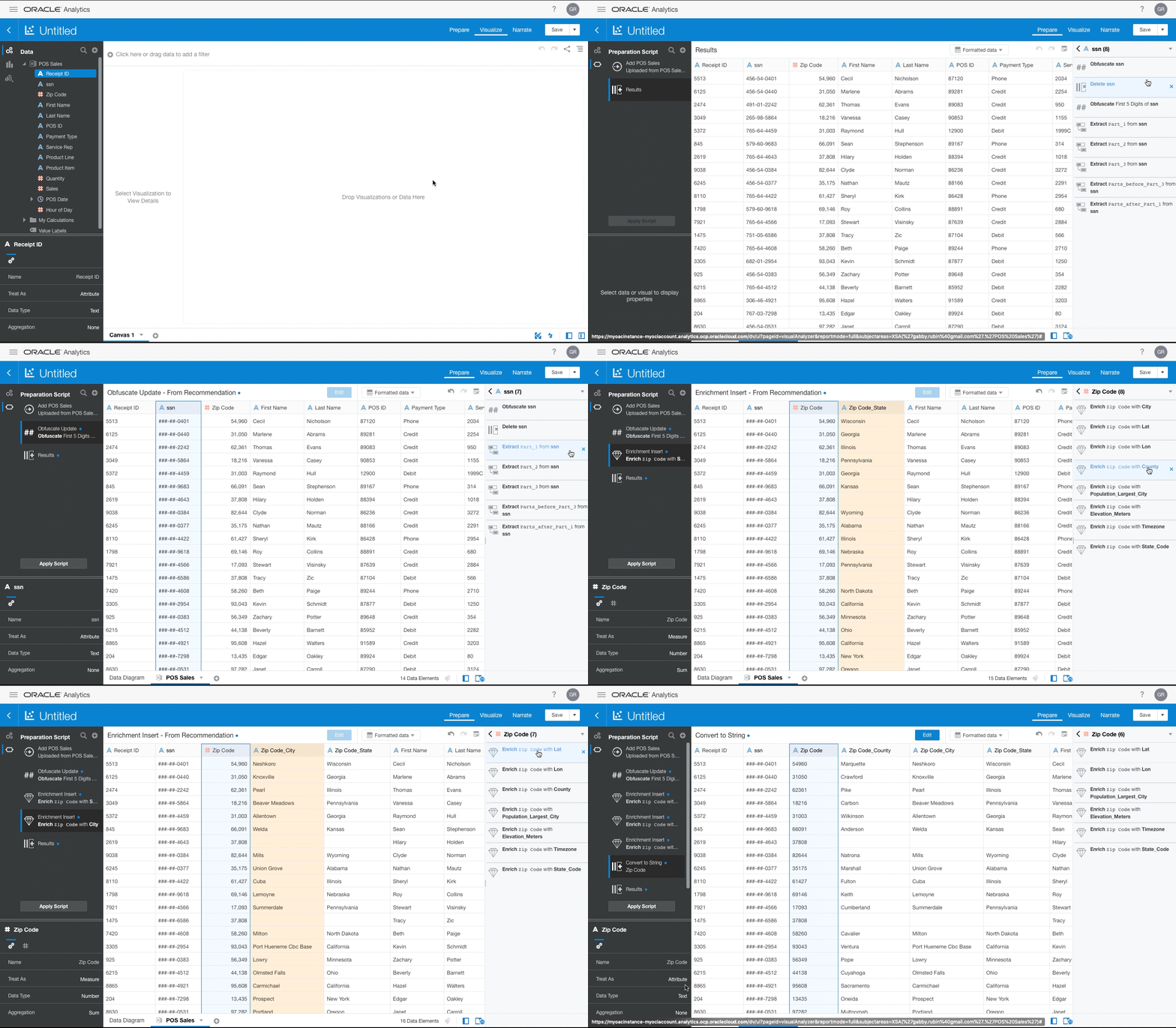
- Augmented Data Enrichment
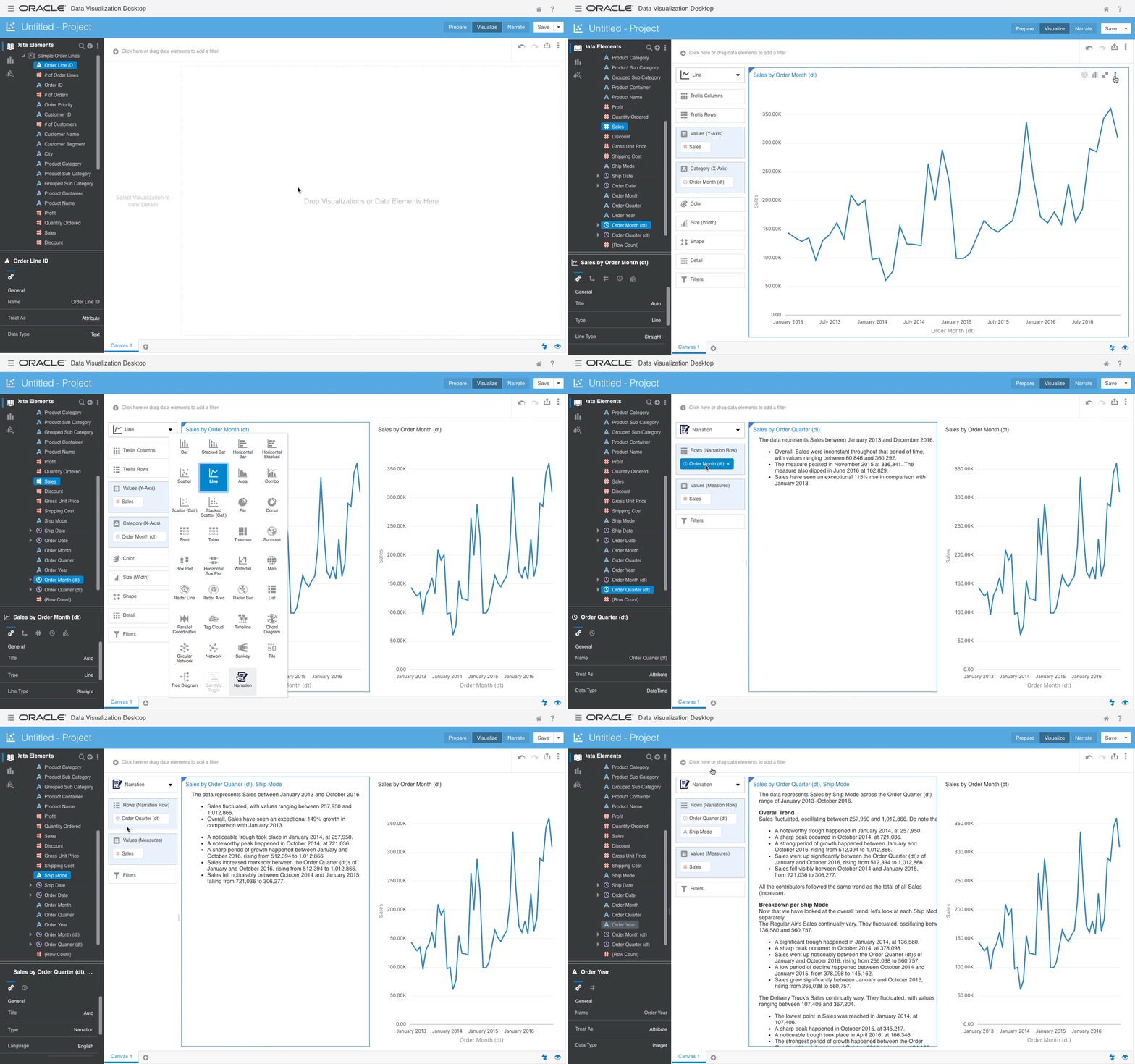
- Automate Narratives with Natural Language Generation (NLG)
- Embedded Machine Learning
For more information on how OAC compares to other business analytics tools, see https://www.oracle.com/business-analytics/comparison-chart.html